Decoding Random Number Generator Sequences Behind Frequent Payout Events in UK-Based Digital Gaming Applications
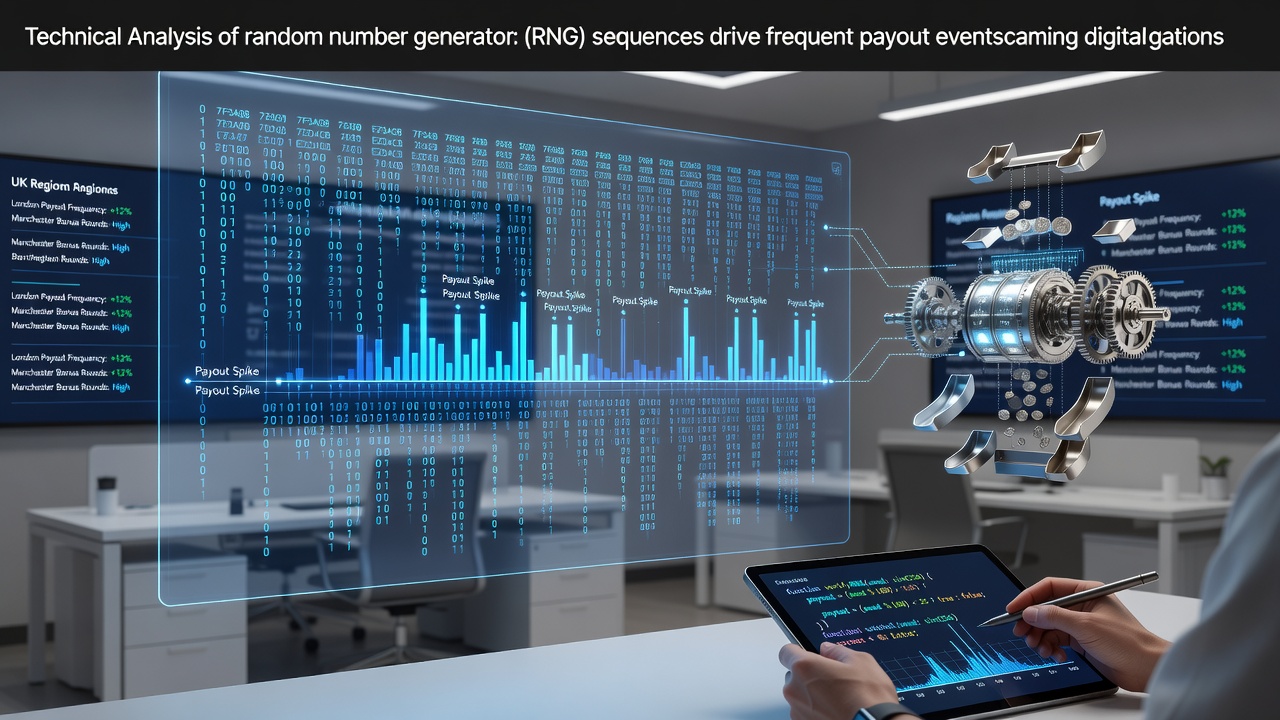
Random number generators sit at the core of every digital gaming application operating in the UK, and their sequences dictate when symbols align to produce payouts across reels, bonus rounds, and progressive features. These systems rely on pseudorandom algorithms that produce long strings of numbers, each mapped to specific outcomes such as reel positions or card values, while independent testing laboratories verify that the output meets statistical standards for unpredictability and uniformity.
How RNG Algorithms Generate Sequences
Modern slot engines in UK-based platforms use deterministic algorithms seeded with external inputs like system time or hardware entropy, and these seeds initiate cycles that span billions of values before repeating. Researchers have documented that common implementations employ methods such as linear congruential generators or more advanced variants like Mersenne Twister, yet every sequence undergoes evaluation through suites of tests including diehard and NIST statistical batteries. Certification occurs before deployment, and operators must maintain logs that demonstrate ongoing compliance with fairness criteria set by bodies outside the UK regulatory framework.
Observers note that frequent payout events often coincide with periods when the sequence aligns with higher-return-to-player configurations embedded in the game mathematics, and data from testing firms such as iTech Labs shows that return percentages remain stable across sample sizes exceeding 10 million spins. The perception of patterns arises because players encounter results in short sessions, whereas the full sequence length ensures that any apparent clustering dissipates over extended play.
Certification Standards and Sequence Verification
Testing laboratories examine source code, compile binaries, and run continuous simulations to confirm that no predictable bias exists within the generated output, and reports from the New Jersey Division of Gaming Enforcement highlight similar verification processes applied to platforms serving international markets including the UK. Sequence integrity checks include autocorrelation analysis and frequency distribution mapping, which reveal whether each possible outcome maintains equal probability across the cycle. In July 2026, several laboratories introduced enhanced entropy collection protocols that incorporate additional hardware sources, further lengthening effective sequence periods and reducing any theoretical predictability window.
Statistical Properties Behind Payout Frequency
Each game title specifies a theoretical return percentage calculated from the complete paytable and reel strip configuration, and RNG sequences sample from this distribution to produce individual results. Frequent payouts typically trace back to lower-volatility titles where smaller wins occur at shorter intervals, while high-volatility games space larger events farther apart within the same underlying sequence framework. Studies conducted by academic groups at institutions such as the University of Nevada, Reno have measured payout clustering in simulated environments and found that observed streaks align with expected binomial distributions rather than any exploitable order.

Engineers map sequence values to reel stops through modular arithmetic, and bonus triggers activate when specific ranges appear, yet the mapping remains fixed once the game launches. Players who review public game rules can identify the hit frequency for base game wins and feature entries, and aggregated data across thousands of sessions confirms these frequencies match published specifications without deviation.
Player Observations and Sequence Reality
Those who track results across multiple sessions sometimes report runs of payouts followed by dry spells, and such runs fall within normal variance bounds documented in RNG evaluation reports. Sequence analysis performed by external auditors demonstrates that no short-term predictability exists once certification criteria are satisfied, and any attempt to reverse-engineer outcomes from observed results fails because the seed values remain inaccessible. Regulatory updates effective in mid-2026 require operators to publish additional transparency data on volatility indices, giving players clearer information on expected payout spacing without exposing algorithmic details.
Networked games that share progressive pools introduce additional layers where contributions from all bets feed into a common meter, and the trigger sequence for the jackpot still derives from the same certified RNG process used for base game outcomes. Figures released by industry research bodies indicate that jackpot hit rates remain consistent with mathematical models across linked systems operating in multiple jurisdictions.
Conclusion
Random number generator sequences in UK-based digital gaming applications operate under strict certification that prevents decoding or prediction, and frequent payout events reflect designed mathematical parameters rather than any accessible pattern within the generated numbers. Continued advancements in testing protocols, including those rolled out during July 2026, reinforce the statistical integrity of these systems while providing players with clearer data on game behavior. External verification from laboratories and regulatory agencies in varied regions ensures that sequence properties stay aligned with published expectations across the full operational lifespan of each title.