Synchronized Payout Cycles: Understanding Collective Prize Growth in UK's Digital Reel Communities
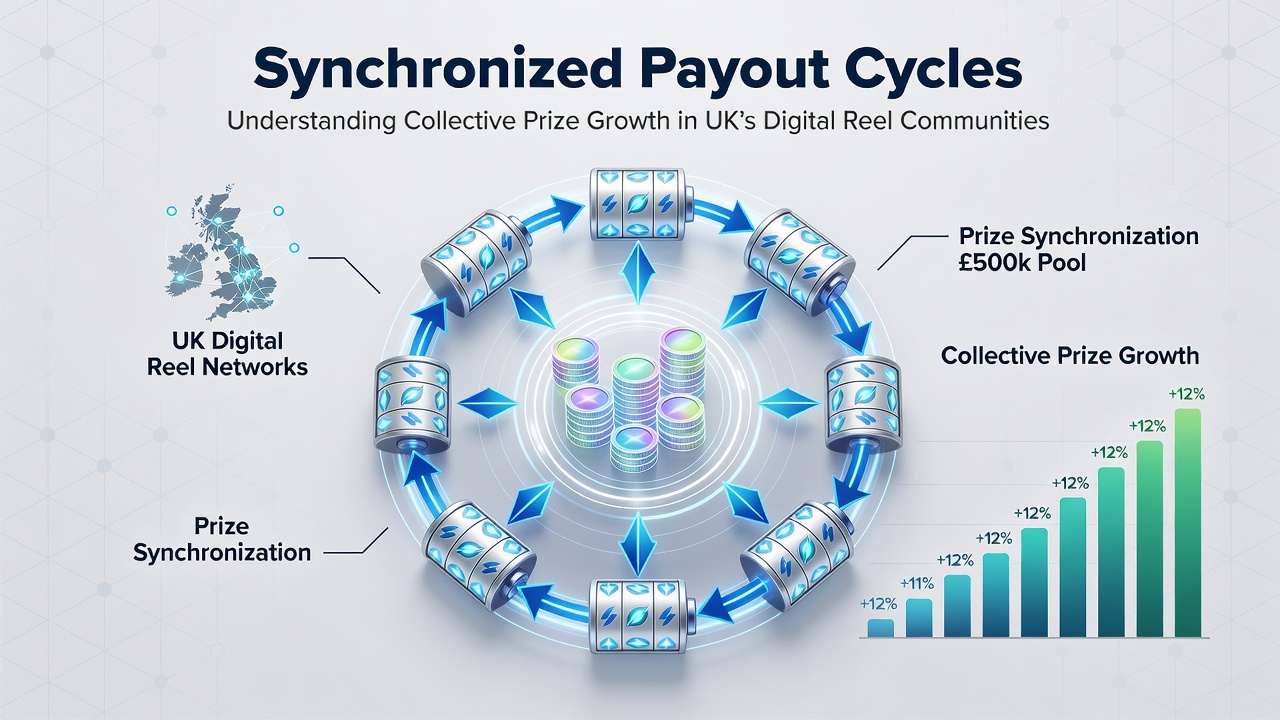
Digital reel platforms in the United Kingdom operate through interconnected systems where payout cycles align across multiple games and operators, creating collective prize pools that expand based on aggregated player activity and predetermined contribution formulas. These cycles function when bets from various participants feed into shared accumulators at synchronized intervals, allowing individual wagers to influence larger prize structures without direct player-to-player transfers. Research from the University of Nevada's International Gaming Institute indicates that such mechanisms rely on algorithmic timing to distribute growth phases evenly across networks, preventing isolated spikes while maintaining steady accumulation rates.
Mechanics of Cycle Synchronization
Operators configure payout cycles through backend protocols that link reel engines to central servers, where each spin contributes a fraction of the stake to communal pots according to fixed percentages. Synchronization occurs when these contributions trigger at coordinated timestamps, often aligned with peak activity periods or scheduled resets that reset meters after major distributions. Data from the Nevada Gaming Control Board reveals that linked systems in international markets, including those accessible to UK users, maintain cycle lengths ranging from hourly increments to multi-day rotations, with each phase building on prior contributions to sustain momentum. Those who examine these setups note that the process incorporates base seeds from operators alongside incremental additions, ensuring pools reach trigger thresholds without relying solely on volume spikes.
Collective Prize Expansion Patterns
Prize growth in these communities stems from networked accumulators that draw from thousands of simultaneous sessions, where each eligible bet increments meters at rates determined by game volatility settings and network agreements. Figures show expansion accelerates during synchronized windows because contributions overlap across time zones and player demographics, creating compounded effects rather than linear increases. Observers note that UK-based platforms integrate these cycles with regional compliance standards, adjusting contribution rates to reflect currency conversions and cross-border participation data. As of June 2026, aggregated reports highlight steady pool escalations tied to mobile session durations, with algorithms recalibrating to balance growth across different reel configurations and bonus structures.
Role of Networked Algorithms in Prize Distribution
Algorithms govern synchronization by monitoring real-time bet flows and adjusting payout readiness based on predefined thresholds, ensuring no single community dominates the cycle while preserving equity among linked titles. These systems employ predictive modeling to forecast when collective pots will reach distribution points, incorporating variables such as average stake sizes and session frequencies from participating regions. A study published through the Canadian Centre on Substance Use and Addiction examined similar networked models and found that synchronized timing reduces variance in prize availability, allowing more consistent access across user bases. Players encounter these mechanics in formats where reel outcomes feed directly into shared ledgers, with each cycle completion prompting a reset that restarts the accumulation phase under identical parameters.
Integration with Digital Reel Ecosystems
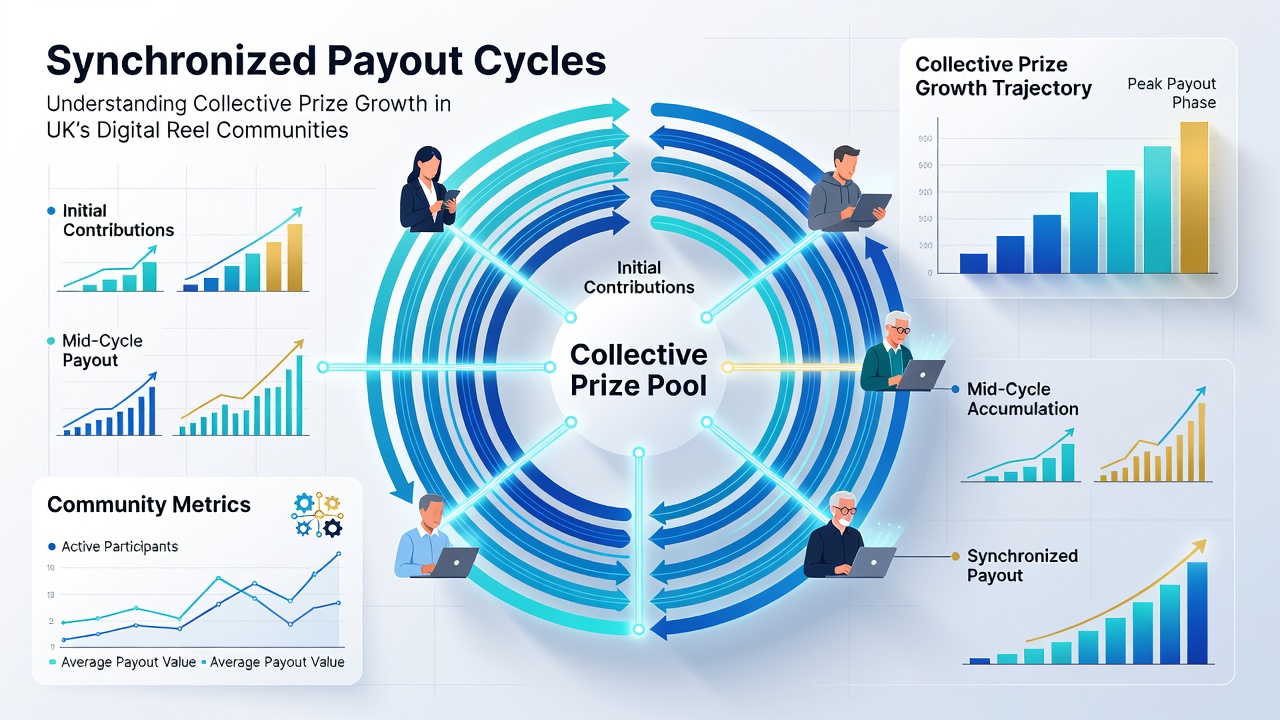
UK digital reel communities embed synchronized cycles within broader platform architectures that combine base games, feature rounds, and progressive layers into unified experiences. Contributions flow from both standard spins and triggered bonuses, with each element calibrated to feed the same accumulator pools at proportional rates. Industry analyses indicate that this integration supports scalability, as operators expand networks by adding new titles without disrupting existing cycle timings. Those monitoring these developments observe that June 2026 data reflects increased mobile integration, where app-based sessions contribute to the same synchronized frameworks as desktop platforms, maintaining continuity across devices and connection types.
Regulatory and Operational Considerations
Frameworks governing these cycles emphasize transparency in contribution percentages and cycle durations, requiring operators to publish meter statuses and historical distribution records. External audits verify that synchronization protocols align with stated parameters, preventing discrepancies between projected and actual prize growth. Reports from the Australian Communications and Media Authority on networked gaming systems demonstrate how such oversight extends to cross-jurisdictional operations, ensuring UK-accessible platforms adhere to equivalent standards for collective pool management. Operators adjust cycle parameters periodically based on participation metrics, recalibrating to sustain engagement levels while complying with evolving technical requirements.
Future Developments in Cycle Coordination
Advancements in server infrastructure and data processing continue to refine synchronization precision, allowing finer control over contribution intervals and distribution triggers. Emerging protocols explore real-time adjustments that respond to fluctuating network loads, preserving cycle integrity during high-traffic periods. Evidence from longitudinal tracking shows these refinements correlate with more predictable prize availability patterns across participating communities. UK platforms incorporate these updates through phased rollouts, testing compatibility with existing reel engines before full deployment.
Conclusion
Synchronized payout cycles represent a structured approach to collective prize management in UK's digital reel communities, where algorithmic coordination and contribution mechanics drive pool expansion across interconnected networks. Data from multiple regulatory and research sources confirms that these systems maintain operational consistency through standardized timing and transparent reporting, supporting sustained growth in shared accumulators. Continued refinement of these processes aligns with broader industry shifts toward integrated digital platforms and cross-device participation.